

The Drive, The Desert, and The Decision
The car jostled and jolted along the Arizona desert highway. We had been driving all day from our home in San Luis Obispo, my roommates and I. The AC was blasting from the vents up front and curling towards me into the back seat. But I was fixated on the winter sun that pressed warm and heavy against my face. That Arizona sun that strikes every surface with intense fulgence. I had my cheek almost to the glass. Squinting into the last hard light of the afternoon, one hand raised slightly against the glare, trying to see.
Outside, the world was busting with otherworldly life… well, to me.
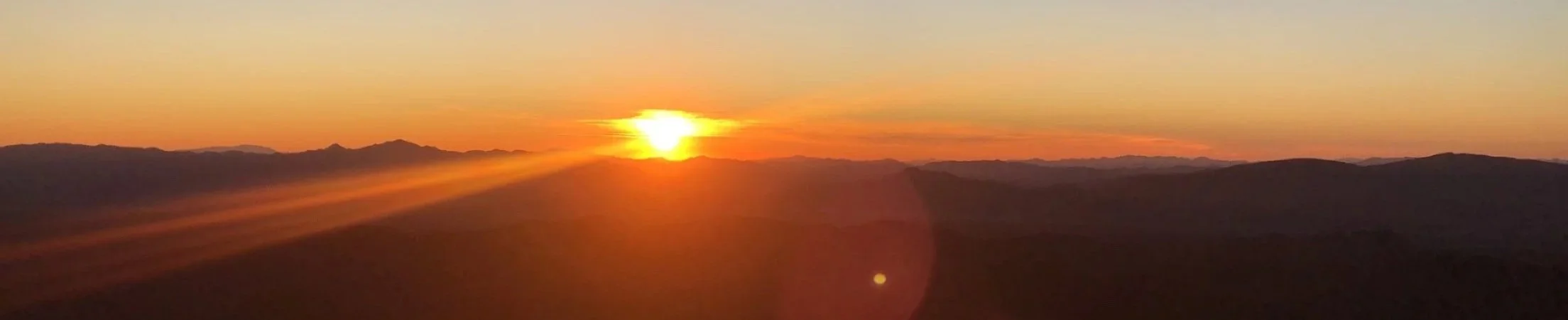
A full combustion of color that doesn't ease into evening so much as ignite it. Orange layered into pink layered into a deep bruised purple at the edges, stacked with clouds so high and so still they looked like they had drifted loose from the atmosphere entirely. The numinosity of the landscape laid out before me - dry and ancient. Everything was still. The landscape did not move the way California landscapes move, all rustling grasses and shifting coastal light. This was different. Monolithic. Prehistoric. Quietly, enormously itself.
And rising out of the rocky earth against that burning sky, in perfect dark silhouette: the saguaros.
My friends up front were exchanging facts about them. Looking up information on their phones, reading them aloud, marveling at the numbers: how old they grow, how slowly, how a saguaro the height of a person might already be decades old. I was listening with one ear and genuinely in awe. The saguaro is one of the most extraordinary living things on earth and seeing them at scale, in their actual home, moving past the window in that amber light, was something I won't forget.
But somewhere underneath the awe, quiet, persistent, pulling at the edge of my attention like a thread… something else was calling.
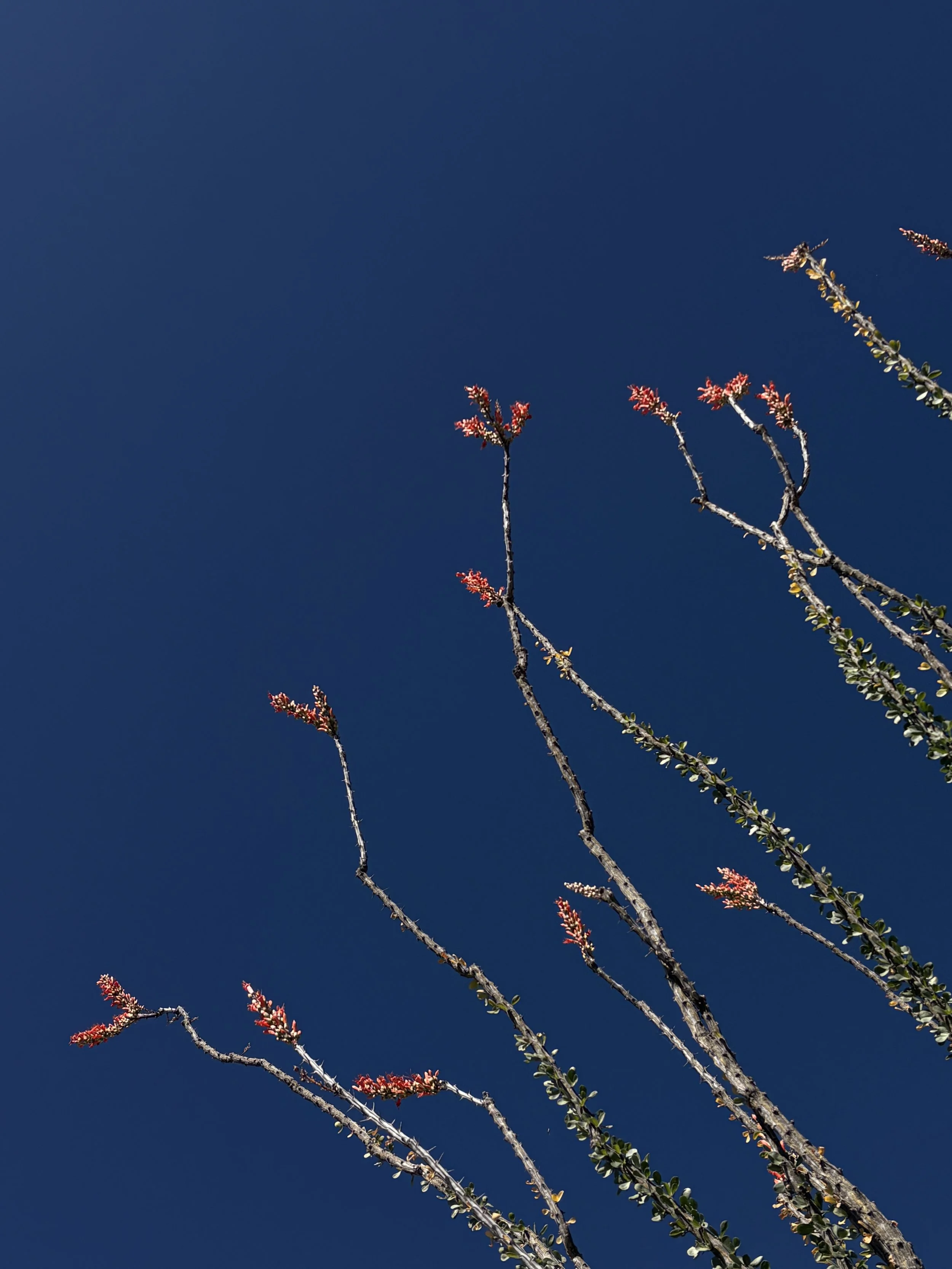
Between the saguaros, rising from the rocky soil on long thin arms that reached straight up toward the sky, were plants I had never seen before. Not in a book. Not in a photograph. Not anywhere, actually. They looked alien and architectural and strangely graceful, like ocean kelp translated into desert, clusters of whiplike stems climbing upward with a kind of relentless vertical energy. Thorned. Structural. Completely, utterly… unfamiliar.
The sun was hitting them from behind and they were pure silhouette against that impossible sky. Just form, just line, just reach.
I didn't say anything. My friends were still talking about the saguaros.
I pressed my cheek back to the warm glass and watched the ocotillo go by and thought:
What IS that.
I have come to understand, in the years since that drive, that noticing the other thing is simply how my mind works.
While everyone else is drawn to the most recognized, most celebrated, most immediately iconic element in the room, I am quietly, almost involuntarily, pulled toward whatever is just beside it. The thing that is doing something just as extraordinary but hasn't been handed its reputation yet.
The ocotillo is not the saguaro. It does not appear on postcards or coffee mugs or the logos of every Southwestern brand reaching for desert credibility. It doesn't carry that immediate silhouette recognition: that tall columnar form the whole world seems to know without having been taught it.
But spend any real time with the ocotillo and you begin to understand that it might be the more interesting plant. (That was a scary line to write.)
Its structure is unlike anything else: long reaching arms emerging directly from the base and climbing toward the sky with a relentless upward insistence, as if the whole plant is permanently mid-gesture, forever in the act of growing toward something just out of reach. In spring those arms are tipped with blooms the color of a struck match. Bright red clusters that burst from the top of each stem like a celebration. The kind of thing you only see if you think to look up.
But what I love most, what made me eventually choose the ocotillo as the symbol of Drawn Outside, is what it does in response to the desert itself.
When it rains, the ocotillo leafs out almost immediately. Green, alive, lush in a way that feels almost transgressive given the landscape it inhabits. As the soil dries, it releases those leaves quietly and returns to its bare structural form: patient, waiting, completely unbothered. It can be pulled from the ground and look entirely dead. Plant it. Give it water. It comes back without complaint, without drama.
It is one of the most responsive plants in the Sonoran Desert. It does not fight its environment or ignore it. It reads the conditions and it adapts and it survives… and then at the exact right moment, when everything aligns, it blooms brilliantly at the very tips of its highest arms where almost nobody thinks to look.
That responsiveness is the quality I want most for this practice.
I wish I could tell you the logo came to me in some dramatic moment of creative clarity. A vision. A breakthrough. The kind of story that makes for a satisfying origin myth.
What actually happened is considerably more ordinary and considerably more right.
I was sitting at my desk in the home I share with my partner here in Tucson, staring at a blank page, trying to figure out what my brand could possibly look like. The yard outside my office window is (and I say this with the specific frustration of someone who knows exactly what it could be) a design disaster. A lagoon water feature installed incorrectly. Plants placed with no apparent logic. An African sumac that I have complicated feelings about every single day.
But framing the view perfectly, rising thirty feet above the chaos of that yard and silhouetted against the Tucson city lights beyond, are three ocotillos.
They had been there the whole time. Reaching. Patient.
I sat back in my chair and looked at them for a long moment.
And then I stopped trying to figure out what the logo should be because it had been standing outside my window raising its arms at me for months.
When I began designing the actual mark, I knew the ocotillo had to be the primary form. But I also knew that every element needed to carry a real idea. Not decoration, not visual preference, but meaning embedded deliberately into the structure.

So here is what lives inside the logo, and why.
The ocotillo is the primary form. Those reaching arms, that upward energy, that clarity of structure that reads instantly and belongs completely to this place. It represents the design philosophy I am always working toward. Distinctive without being decorative. Responsive to the environment it inhabits. Resilient in ways that don't always announce themselves. Reaching, always, toward growth.
The Arizona flag lives in the radiating lines behind the form. those iconic sunbeams that anyone who has spent real time in this state will recognize. This landscape is not backdrop. It is context, material, and home. It belongs in the logo because it belongs in the work.
The section line runs across the base of the composition. Landscape architecture lives predominantly in plan view. The bird's eye. The layout on the page. But a section cuts through the plan and reveals what the top-down view can never show: the human experience of moving through a space. The relationship between grade and sky. The way enclosure changes how a person breathes. The way a canopy shifts the quality of light at the exact level where life is actually lived. That line at the base of the logo is a reminder I give myself every time I look at it. Design for the experience. Always. Not the plan, but for the person standing inside it.
Three pens are hidden in the logo's structure. They represent the three pillars this practice is built on.
Observe. Before anything else, you ground yourself in what is. The site. The ecosystem. The human patterns already present. You cannot design for a place you haven't truly seen.
Respond. Design is not expression. It is response. The best work emerges from careful, specific engagement with context, not from the imposition of an idea onto a place that was never consulted.
Draw. Return always to the physical act of making. There is something that happens when a pencil meets paper, when a hand moves across a surface translating thought into line, that no software has yet replaced. Drawing is thinking made visible. It is where design actually begins.
Three pens. Three pillars. The entire philosophy of this practice condensed into a form small enough to hide inside a logo.
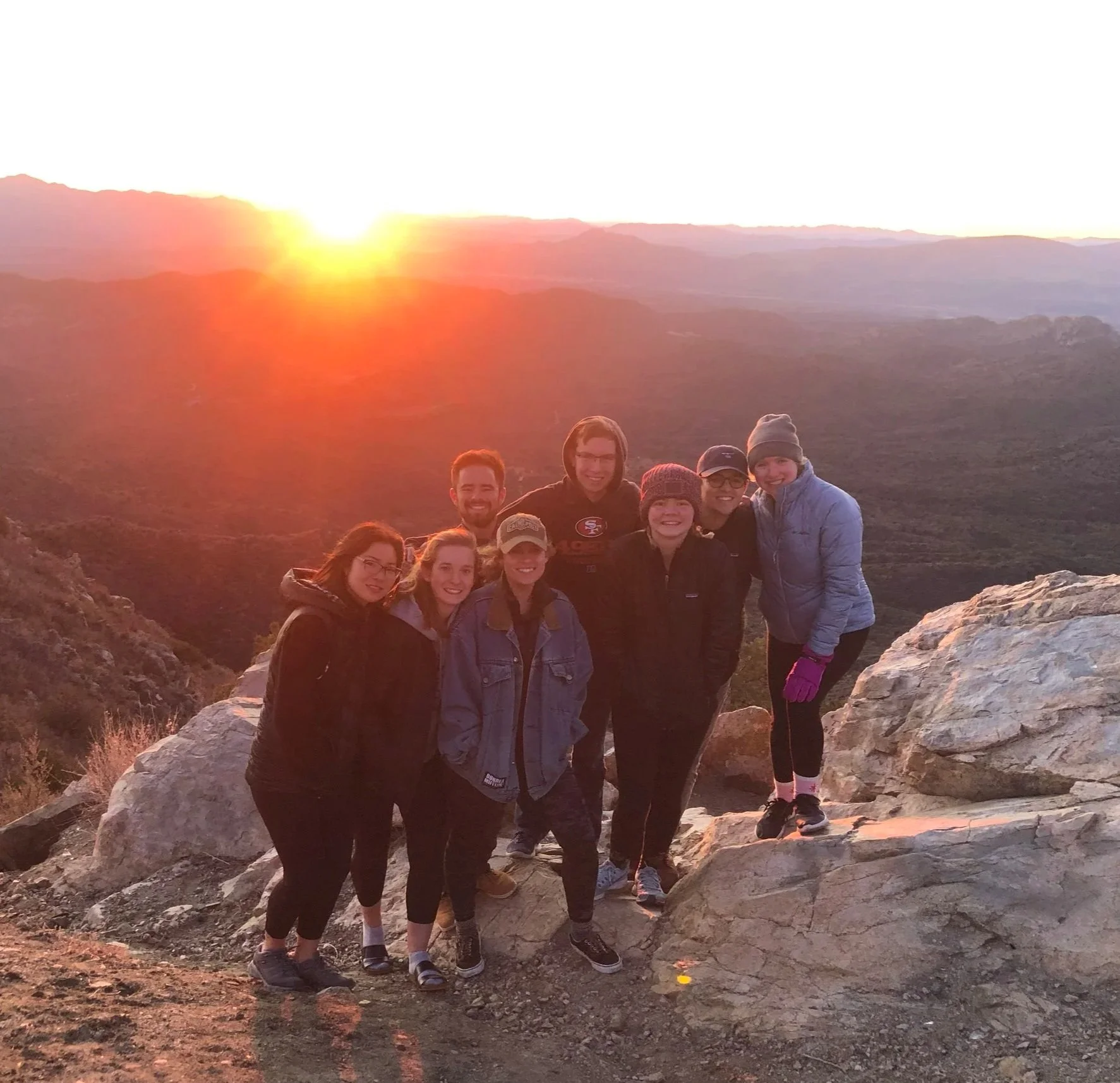
What I did not know while sitting in the back of that car in December of 2019 with my cheek warm against the window and the AC raising goosebumps on my arms is that I was looking at my future logo.
I was just doing what I always do. Noticing the other thing. Sitting with the quiet pull toward whatever is extraordinary without being celebrated, whatever is reaching toward the sky without asking anyone to watch.
The ocotillo has been doing that for a long time.
Responding and adapting and waiting and reaching and blooming briefly and brilliantly at the very top where almost nobody thinks to look.
I think that's a pretty good thing to build a practice around.
Is there something in your environment, a plant, a place, a form, that has shaped the way you think about your own work? I'd love to know what it is.
