

Design is Story
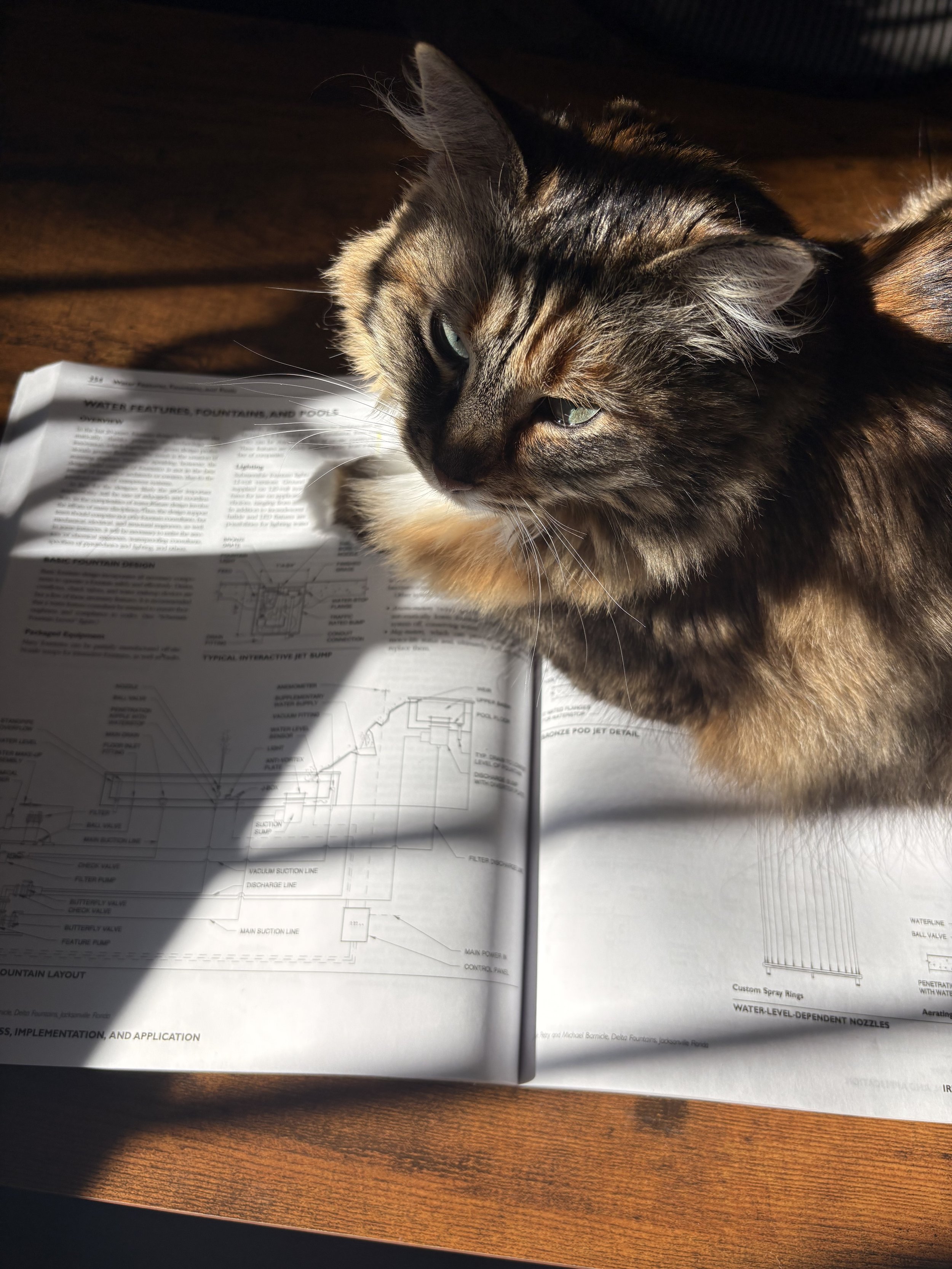
The kitchen table again… always the kitchen table.
The overhead light is too bright and the table is littered in scratch paper. My dad leans over my shoulder, explaining the same algebra problem for the third time. I can feel the frustration radiating off of him. He explains it again. Slower this time (like that's the issue), and for one brief second I think I have it. Duh, of course.
Then he points to one more thing to clarify, and whatever I almost had… slips away completely.
It might as well be an alien language. In one ear, out the other. Gone.
Flip the scene. It's eleven at night and I'm hunched over my laptop, working on a poster for some class project, and I have moved this title block half an inch to the left for the fourth time. I honestly cannot tell if it looks better or worse than it did before I moved it. I move it back. I move it again. My eyes are tired and the two versions are nearly identical and somehow this feels like the most important decision I will make all week.
Two kinds of frustration. Completely different. And somehow, in this profession, you need to be fluent in both. Whoopee.
Lucky for me, environmental design lives at the exact intersection of these two homework nights that are burned into my memory, as I’m sure they are for you one way or another.
On one side: the math. Slope percentages. The pressure that builds behind a retaining wall. Soil composition and drainage and structural loads… the things that, if you get wrong, the space simply does not work. The wall doesn't hold. The water doesn't drain. The trees die.
On the other side: the title block. Should this path curve or stay straight. This material or that one. Where the eye goes first. What a space feels like to walk through, not just what it does.
Most professions ask you to be good at one of these. Environmental design asks for both, at the same time, on the same project, often in the same hour.
It's the chicken or the egg. Do you start with the constraints or the concept?
I didn't grow up thinking these were conflicting things, which I think gave me an advantage I didn't realize I had until much later.
My dad owns an engineering firm. My mom is an author. Logic and structure on one side of the house, imagination and story on the other… except that's not actually how it worked. They weren't on opposite sides of anything. They ran together. My dad's work required creative problem-solving constantly. My mom's work required structure, discipline, and an understanding of how a story actually functions underneath the magic of it.
One could not exist without the other. I just absorbed that early, the way kids absorb things without being told.
What ties the technical and the creative together, what keeps either side from taking over completely, is process.
I know. I talk about process a lot. But stay with me, because I think the best way to explain it is through something most of us learned in school and then never thought about again: the actual mechanics of how a story is built. Not just beginning, middle, end. The real structure underneath all that… the stuff you learn in a college creative writing workshop when you're forced to take apart stories you love and figure out why they work.
Exposition.
Before anything happens, the reader needs to understand the world. What's possible here. What isn't. What are the rules of this place, and who are the people standing in it. A story that skips this either confuses the reader or asks them to trust blindly, and most readers won't.
In environmental design, this is the site analysis. The soil. The slope. The existing structures, the drainage patterns, the way the sun moves across the property in January versus July. Before a single creative decision gets made, you have to understand the world you're working in… completely, honestly, even the parts that are inconvenient.
The inciting incident.
Something happens that sets the story in motion. A problem. A question. A character wants something they didn't want yesterday.
This is the design problem. The client wants a backyard that actually gets used. The space floods every monsoon season and nobody can figure out why. There's a slope nobody has addressed because addressing it felt too complicated. Something needs to change, and that need is what gives the project its direction.
Rising action.
This is the part of the story that does the most work and gets the least credit. It's where complications get introduced, not to make things harder for the sake of drama, but because real stories (and real sites) are complicated. Every solution creates a new question. Every choice closes off some options and opens others. The tension isn't a flaw in the story. The tension is the story.
This is where most of the actual design work happens. You propose something, and then you test it against the constraints: does it drain, does it hold, does it survive the soil, does it work with the existing grade… and sometimes it doesn't, and you go back and try again. Iteration isn't a sign that something went wrong. It's the middle of the story doing exactly what it's supposed to do.
The climax.
The moment everything that's been building finally resolves, where the technical and the creative, which have been pulling against each other the whole time, suddenly align. The concept makes sense and it's buildable. The material choice is beautiful and it solves the drainage problem. The path curves the way you wanted it to and the curve happens to be exactly where the retaining wall needed to step down anyway.
This moment doesn't happen by accident. It happens because of everything that came before it. All that exposition, all that rising tension, all those iterations that didn't quite work. The climax is earned. It's not a lucky guess.
Falling action and resolution.
Everything after the climax exists to make the story feel complete. Loose ends get tied. The reader understands what the world looks like now, after everything that happened.
In design, this is construction documentation. Detailing. The unglamorous, essential work of making sure every decision that was made in the exciting part of the process actually gets built correctly. A beautiful concept with no resolution is just an idea. The resolution is what makes it real.
Environmental design has this same shape. The technical constraints and the creative possibilities aren't enemies fighting for control of the project. They're the exposition and the rising action of the same story. The process is what carries you from one to the other and makes sure the ending actually works - that the space drains during monsoon season, that the shade trees survive August, that the wall holds when something runs across the slope above it at two in the morning.
Without that structure, you're just standing at the kitchen table forever, or moving a title block back and forth until midnight with no idea if you're getting closer to anything.
I have a process. It's mine. Built slowly through a lot of projects and a lot of trial and error. It's the thing I rely on every single time a project starts to feel too big to hold in my head all at once.
I'll save that for next time.
What does your version of "the kitchen table vs. the title block" look like? I'd love to hear how it shows up in your work.
