

The Myth of Pure Expression
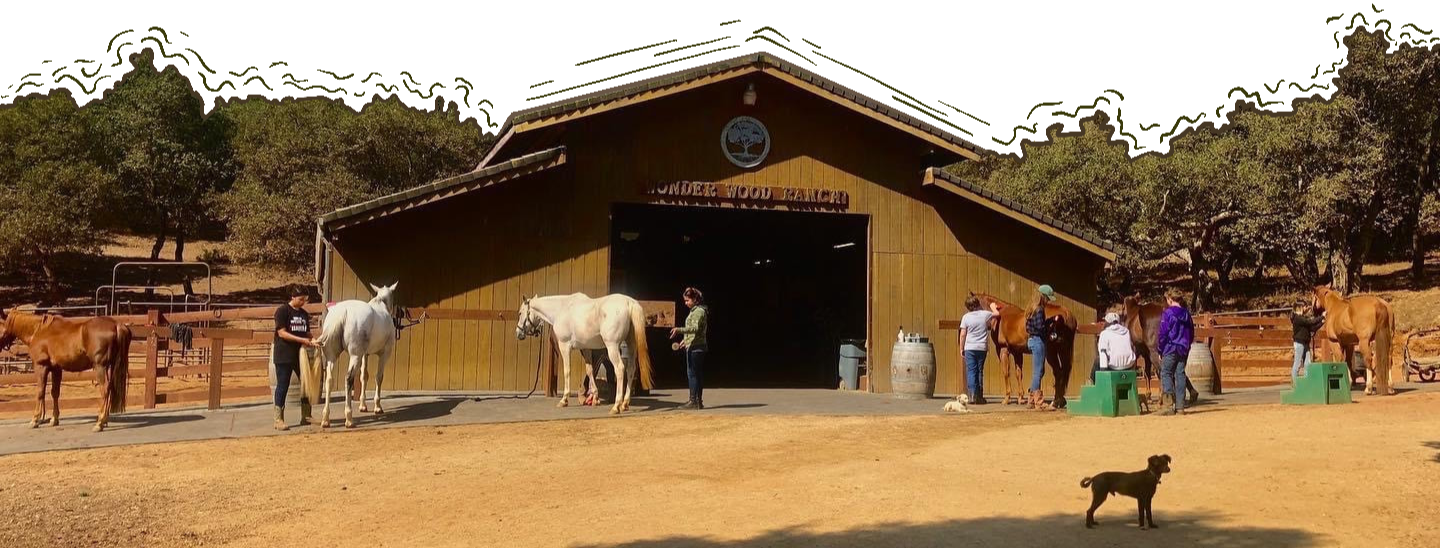
The barn - the first space I really had a hand in creating. Watching people use it as intended, enjoying the company of the horses and one another.
There's a romantic idea at the beginning of every creative journey.
A blank canvas. No constraints. Endless freedom. Pure expression flowing from somewhere deep and instinctual into something entirely new.
I've written about why I don't think that's how the best design actually works. Context matters. Process matters. Constraints aren't the enemy of creativity, but the conditions that make real creativity possible. Blah blah blah.
But there's one more myth I want to name. And it might be the most important one in this series: The idea that design, environmental design specifically, is primarily an act of expression.
It isn't.
This Work Has Weight
When I sit down to design a space, nothing about what I'm working with is abstract.
The site exists. The ecosystem exists. The client exists. The budget exists. The maintenance reality exists. Time exists. None of it is negotiable. None of it disappears because I have a beautiful concept or a compelling precedent image or a really elegant idea on paper.
There is a real weight that sits on the shoulders of environmental designers. I don't say that to be dramatic, even though a love a little drama. I say it because I think it's one of the most honest and important things about this profession. It is one of the things that drew me to it without me fully understanding why.
Creativity in this field isn't solely about expression. It's about response.
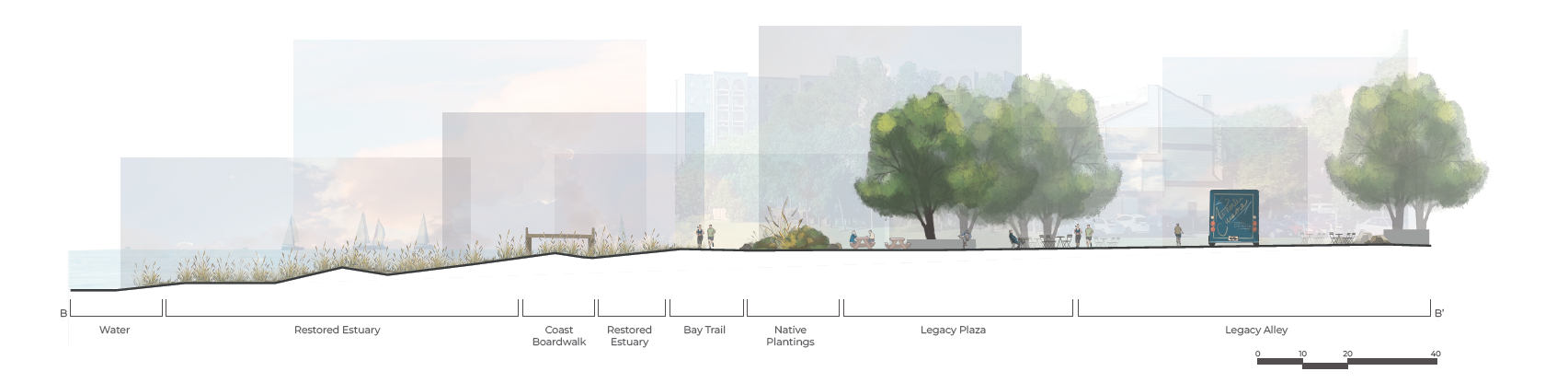
A section from a college studio project I was particularly proud of. A real place, for real people.
The Difference Between Art and Environmental Design
I want to be careful here, because this is not a conversation about value. Art and environmental design are not in competition. They are not ranked.
They carry different responsibilities. I think that distinction matters. Art can exist for the sake of exploration. It can be personal, interpretive, unresolved. A painting doesn't have to function. A sculpture doesn't have to drain correctly. A poem doesn't have to support the weight of foot traffic or outlast twenty years of weather cycles.
Art can simply be. Environmental design has to work.
The grading has to move water away from structures. The circulation has to feel intuitive enough that people move through a space without frustration or confusion. The planting has to survive the climate, the soil, the maintenance budget of the person who will actually be caring for it years after the designer has moved on. The structures have to hold. The materials have to age with dignity.
And underneath all of that technical reality, the space has to support real people living real lives.
That is a different kind of creative responsibility.
Creativity With Consequences
Here's the thing that makes me genuinely passionate about this work.
Every decision has consequences.
That sounds heavy, and it really isn’t, but I find the pressure clarifying. It means the work matters in a very tangible, unmistakable way.
If a space is designed poorly, people feel it. They feel the discomfort of a path that doesn't quite go where their feet want to go. They feel the frustration of a space that should invite gathering but somehow never does. They feel the inefficiency of a layout that looked logical on paper and makes no sense in person. They may not be able to name what's wrong, but they feel it.
And if a space is designed well? People feel that too. Usually without even knowing why.
The best spaces don't announce themselves. They don't ask to be noticed or admired. They just work. They feel inevitable. They feel like they were always supposed to be exactly where they are, exactly as they are. They feel like they belong.
That invisibility is not a failure of the design. I think it is the highest compliment the design can receive.
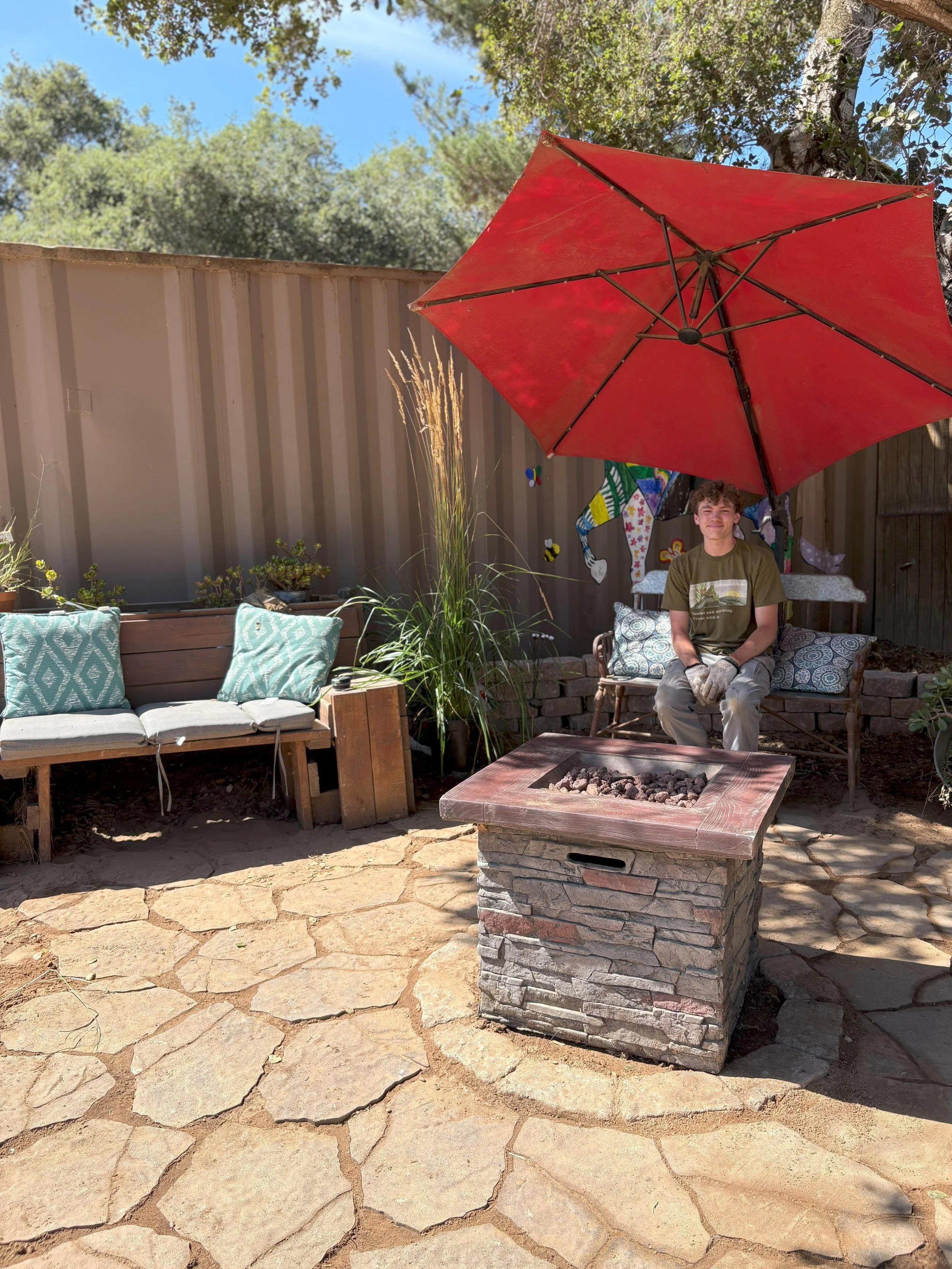
One of our favorite little spots we created on the ranch, a place where people are often chatting and laughing.
The Quiet Impact
There's something I've started to notice as I move further into this work…
The moments that mean the most to me are not the moments when someone points to a design decision and compliments it. I find pride in the moments when I watch someone use a space I helped create and they're just… comfortable. Happy. Present.
They're not thinking about the path. They're just walking it. They're not noticing how the grade shifts or how the planting softens the edge of the structure. They're just sitting in the shade, talking to someone they love, completely at ease in a place that was carefully, intentionally made for exactly that.
My work is in that moment. Invisible. Doing exactly what it was designed to do.
I don't want my designs to scream my name across a plaza. I want the plaza to collect people, all different kinds of people, at different times of day, for different reasons, and give them a place to stay. To connect. To feel, even briefly, that the world just outside their door is worth being in.
That quiet impact is what drives me.
Environmental designers are rarely celebrated. The profession doesn't often get the recognition it deserves for the role it plays in how people actually experience their daily lives. But the impact is real. It's in the parks people return to every weekend. In the campuses where students find unexpected community. In the neighborhoods where someone chose to sit on a bench and strike up a conversation because the space made it feel natural to do so.
That impact lives in people's memories as places that brought them joy. Long after they've forgotten who designed it.
And that's exactly how it should be.
What draws you to the kind of creativity that carries real stakes? And have you ever experienced a space so well-designed that it shaped your experience without you realizing it until later?
