

The Myth of the Blank Canvas
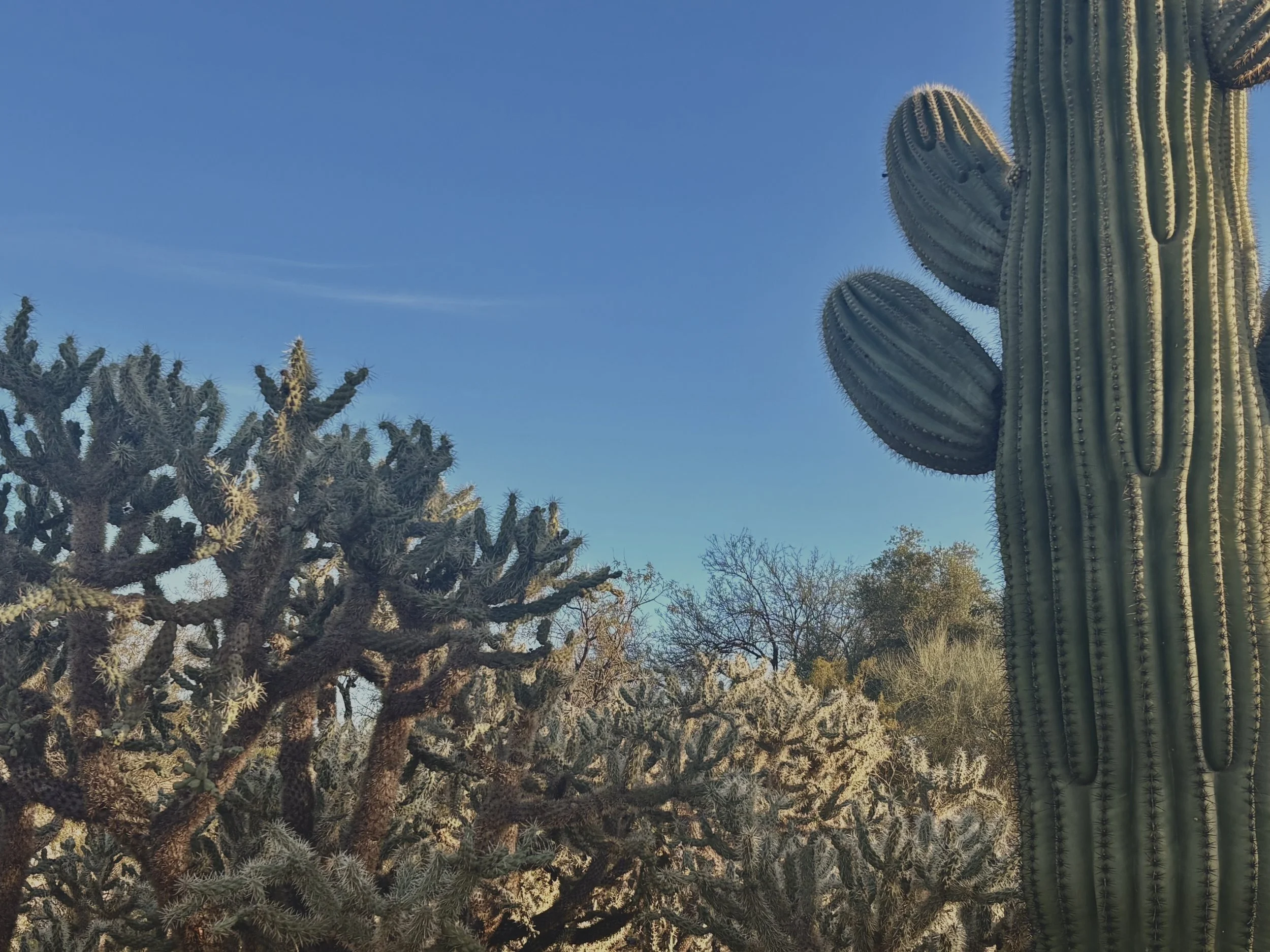
A towering saguaro cactus in Tucson’s Sonoran Desert catches the late afternoon light, while structural jumping chollas glow gold beneath a clear Arizona sky. This iconic desert pairing defines the Southwest landscape - dramatic, resilient, and quietly radiant.
For a while, I’ve been quietly wrestling with a question that feels slightly uncomfortable to admit: Am I actually creative?
My brother can sit down with a blank canvas and paint a glowing scene out of thin air. Sunlight filtering through oak leaves, golden rays along a grassy hillsides, a sparkling bend of a babbling brook. It feels effortless. Self-contained. Originating from nowhere and everywhere at once.
I am in awe of what he can do at only 16, and I am so proud. And at the same time, I’ve found myself thinking:
Why can’t I do that?
Why don’t I wake up with these scenes composed so naturally? Why can’t I see how the light reflects off the nautrual textures of a landscape. Why can’t my pencil outline the form of… well, anything.
Why do I struggle so much to initiate something from nothing?
There are moments where I question whether I even belong in a creative field at all.
But when my thoughts stumble over each other in a bumbling mess of self-criticism, I have to redirect before falling into a hole of self pity. There’s something more to this idea of “creativity” that I just have not processed yet.
The Walks That Changed My Thinking
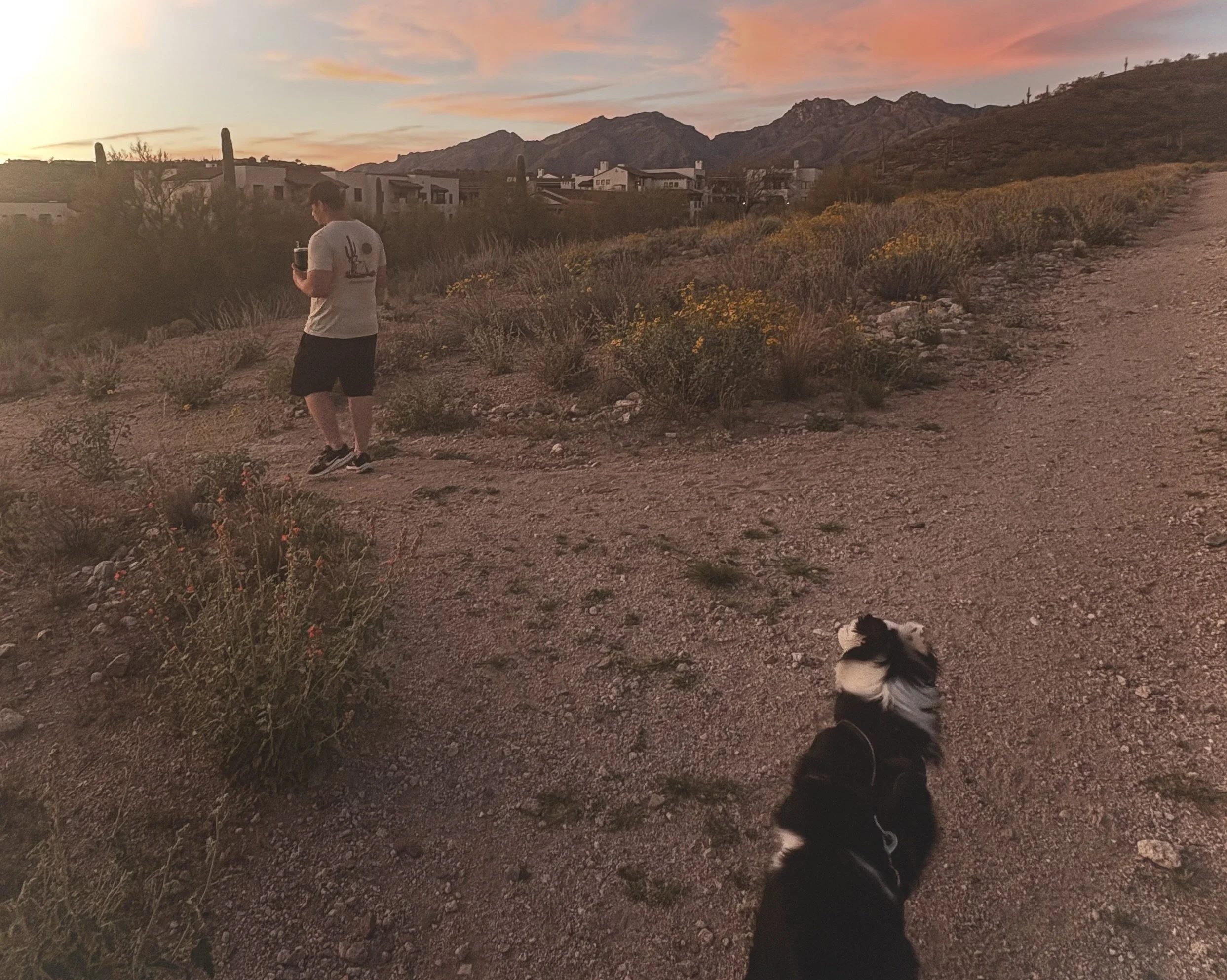
Evening walk along a classic Tucson neighborhood desert trail with my partner Austin and our border collie, Boo. Surrounded by native desert plants, mountain silhouettes, and an Arizona sunset, this is everyday life in the Sonoran Desert - grounded, open, and connected to the land.
My partner, Austin, and I walk our border collie through the winding Tucson neighborhoods several times a week. It’s one of my favorite rhythms - the warm desert sun on our shoulders, the fast pace (mostly due to Boo’s determined nature), sometimes deep, but mostly silly conversations between the two of us.
But what I have found so surprisingly captivating is studying the built environment.
The way homes sit strangly on expansive residential lots.
The striking proportions of old desert vegetation.
The homes, many a timecapsul, untouched by modern rennovators.
The unique sonoran material palettes.
The glimpses into backyards through alley openings.
And something interesting happens.
I don’t look at these spaces and think, “if I could wipe this site clean, what could I create?”
I see these properties and my mind races:
The flow from pool to patio would be so unique if we added this like that.
The view of the foothills would reflect the colors of the classic brick archticture if we opened this sightline more.
This is such an incredible Saguaro here - it really deserves to be celebrated in this way.
What a cozy place to sit and wait for a friend to arrive, they really could use a shady comforatble area right about here.
And it dawned on me, my brain doesn’t start with invention. It starts with transformation.
Creativity as Response, Not Origin
That realization reframed everything for me.
Maybe I’m not someone who creates from nothing.
Maybe I’m someone who responds to something.
When there is context - space, texture, climate, client needs, ecosystem - my thinking accelerates. Ideas build off what exists. Constraints create clarity. Boundaries create momentum.
Without context, I stall.
With context, I thrive.
And that doesn’t make me less creative.
It just means my creativity is activated differently.
The Role of Context in Confidence
I’ve noticed this pattern beyond design.
In relationships, I connect more easily when there is a shared environment or common ground.
In work, I initiate faster when there is a defined scope.
In school, I excelled in studios that emphasized site analysis and inventory before concept development.
I don’t need rigid rules. But I do need context.
Context gives me something to push against.
It defines what’s appropriate, and once I understand what’s appropriate, I can stretch it.
You cannot define what is bold without knowing what is baseline.
You cannot define innovative without understanding the existing system.
Context creates the conditions for creativity to be effective.
Why Environmental Design is My Thing
This is why I believe I’m in the right profession.
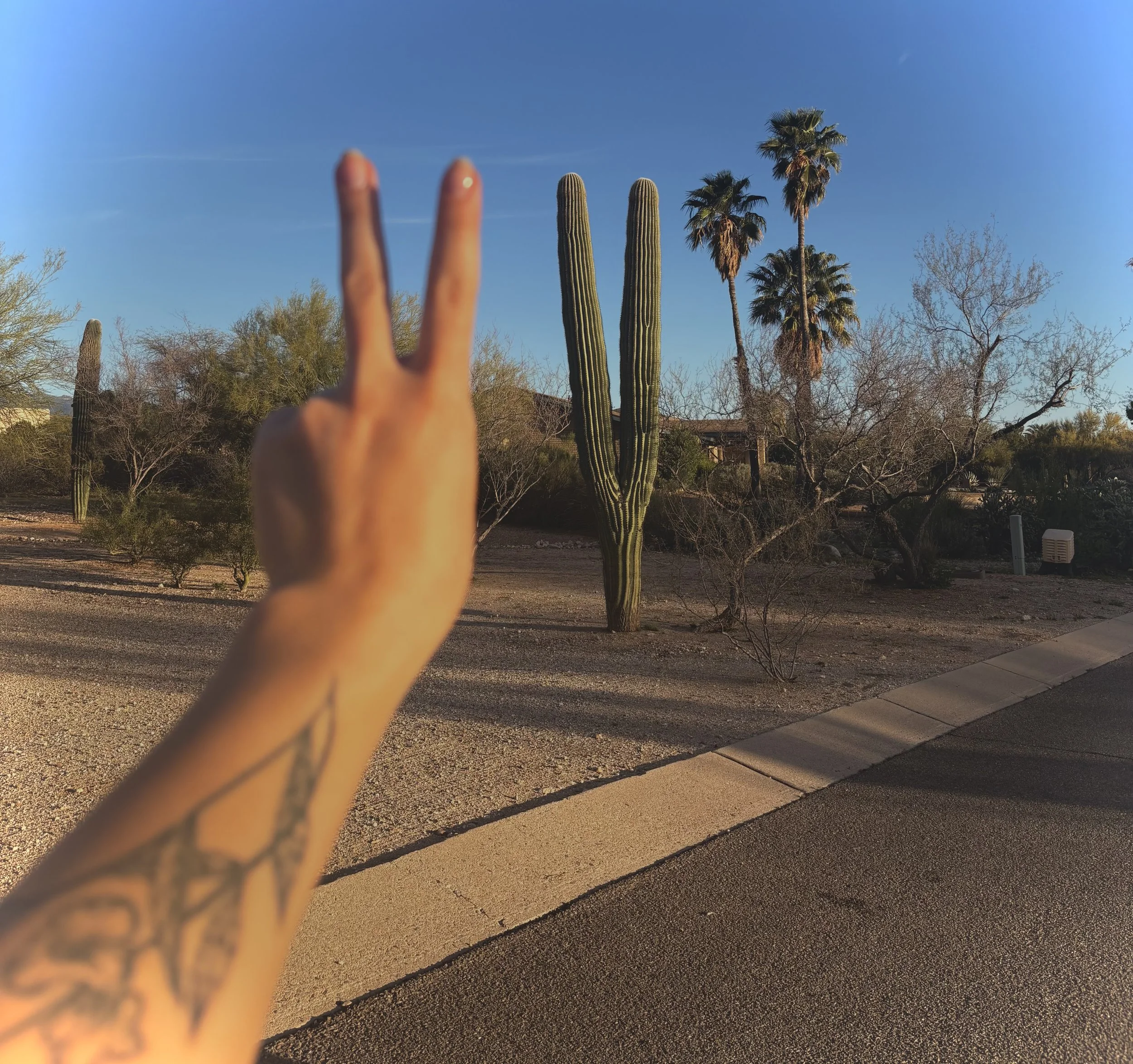
This unique double-armed saguaro cactus in Tucson, Arizona felt like it was flashing a peace sign against the desert skyline. Sculptural and expressive, saguaros are living symbols of the Sonoran Desert, each one shaped by decades of sun, drought, and time.
Environmental design is never about inventing in a vacuum. The site already exists. The ecosystem already exists. The client already exists. The budget, the views, the maintenance realities… they all exist.
Creativity in this field is not abstract, it’s relational.
It’s about shaping what is already there into something more intentional, more functional, more meaningful. And that feels deeply aligned with how I think.
Maybe creativity isn’t about pulling something out of thin air. Maybe it’s about seeing potential in what already exists and having the discipline to transform it thoughtfully.
I’m curious:
Do you feel like context fuels your creativity?
Or do you create best from a blank slate?
When you feel creatively blocked, do you remove constraints… or add them?
This is something I’m still exploring.
But I’m starting to feel a little less like an imposter, and a little more like a designer :)
